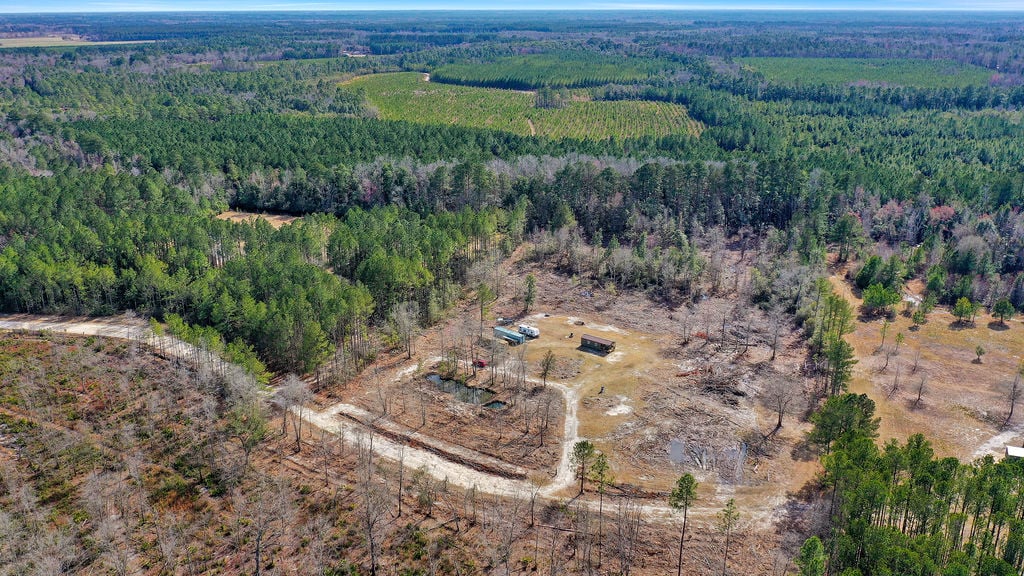
"When we were looking at the highest and best use of this property, we want to be in character with the Bryan County comp plan." That's what William Cunningham of Coleman Company told the Bryan County Planning and Zoning Board on August 18, 2026, while representing a request to rezone 35 acres off Highway 280 from agricultural to commercial use. The parcel sits near Kia Drive and Olive Branch Road, close enough to Hyundai Motor Group Metaplant America that you could walk it in twenty minutes. The developer, Baca Properties, wants to build 270 apartments and 29,000 square feet of commercial space there. The board recommended approval. The Board of Commissioners has not yet scheduled a final vote.
That phrase, highest and best use, is doing a lot of work. It raises a question: how have home prices in Ellabell changed alongside a $7.6 billion factory nearby?
The story you'd expect, and the numbers that don't tell it
The instinct is simple: a factory this size lands, thousands of jobs show up, and home values in the closest town take off. Ellabell sits at the center of that story. Hyundai's plant is projected to employ around 8,500 workers at the assembly and battery operations combined, with thousands more jobs riding on suppliers and logistics partners in the surrounding area.
Now look at what Ellabell's own price data says instead. As of June 2026, one widely used estimate put the typical Ellabell home value at $321,786, up half a percent over the previous year, with roughly 30 percent of active listings taking a price cut. That same month, another source listed Ellabell's median list price at $339,000, down 2 percent year over year, with homes sitting on the market a median of 94 days. A third estimate showed the average Ellabell home value at $316,341, up 1.3 percent.
Three numbers, three sources, three different stories about the same town in the same year. One says modest growth. One says outright decline. That disagreement is itself a signal. In a market that's genuinely booming, the estimates tend to agree with each other, even if they don't agree on the exact figure. In Ellabell, they can't even agree on direction.
How nearby markets compare
The comparisons below pair Ellabell's mixed home-price estimates with recent Richmond Hill sales and rental-market reports from Pooler. They do not establish that price pressure from the Metaplant shifted elsewhere.
Richmond Hill, the established Bryan County community about 20 minutes south, is the closest place with existing infrastructure, schools, and inventory ready to absorb relocating workers. Closed-sale data for the three months ending in May 2026 put Richmond Hill's median sold price at $402,000, up 1.3 percent year over year, with homes selling in an average of 57 days compared to 66 days the year before. A separate tracking source covering roughly six months of closings through August 2026 put the median closing price even higher, at $446,895 across 420 tracked sales.
At the same time, at least one home value index for Richmond Hill's zip code showed a decline of 1.8 percent over the same period. Two estimates, same market, same year, pointing in opposite directions. That's worth sitting with for a second. A home value index and a closed-sale median aren't measuring the same thing. One is a computer's guess at what a broad set of homes would sell for today. The other is what buyers actually paid at the closing table. When they disagree this sharply, the closing table number is the one to trust for a market that's genuinely moving.
Pooler is telling a similar story from a different angle. Property managers serving the corridor describe rental demand there as outpacing supply, with well-qualified tenants filling homes faster than at almost any point in recent memory, driven by the same wave of relocating Hyundai and supplier employees choosing Pooler's established housing stock and its shorter commute to Savannah/Hilton Head International Airport.
Ellabell sits closer to the plant than either of them. Its home-price estimates, however, show mixed results.
What the zoning maps show
Here's one part of Ellabell's development picture. The projects described below include industrial, multifamily and distribution uses, alongside other development in the area.
Look at what's actually broken ground or opened in Ellabell over the past year, or is moving through the zoning pipeline:
- Ridgeway Logistics Park, a 335-acre industrial development from Scannell Properties, sits directly across from the Metaplant and adjacent to a new I-16 interchange still under construction. The first phase alone is a 1.1 million square foot building, with the full park expected to reach nearly 4 million square feet once complete, according to Scannell's own project announcement.
- Burlington Stores opened its largest distribution center to date in Ellabell in June 2026, a 2 million square foot facility expected to generate about 1,500 jobs at full capacity. It's Burlington's first Georgia facility.
- The 270-unit apartment project from Baca Properties, the one that opened this piece, is moving through the same zoning pipeline right now.
None of that is single-family housing stock. It's warehouse space, distribution jobs, and rental units, the categories of development that show up as commercial land sales and construction permits, not as home sale comps. Real estate listings covering parts of the county already describe those parcels as falling inside an area the county's comprehensive plan designates for growth through 2045.
The new I-16 interchange itself, expected to be complete in 2027, is another major infrastructure project in the area.
What this means if you're looking at Ellabell right now
If you're shopping for acreage or a homesite with room to build, land close to the interstate is already commanding a premium, because it's being evaluated for its industrial or commercial potential, not simply as a place to put a house. That's a different buyer, a different appraisal, and a different negotiation than a residential resale.
If you want an existing single-family home for your own household, the flat-to-soft numbers work in your favor for now. A median of 94 days on market and roughly one in three listings taking a price cut, both as of June 2026, mean you likely have room to negotiate, at least until the interchange opens and any of the pending logistics and apartment projects actually deliver and start reshaping local demand.
If your goal is to compare recent market conditions around the corridor, the data above show differences among Ellabell, Richmond Hill and Pooler. They do not establish that those differences are tied to the Metaplant workforce.
A couple of straight answers
Will Ellabell home prices catch up once the new interchange opens in 2027? Nothing in the current zoning pipeline suggests that's the plan. The projects moving through Bryan County's Planning and Zoning Board right now are industrial park and apartment proposals, not new single-family subdivisions. Whether that changes depends on future comp plan decisions, not on the interchange alone.
Is buying land near the Metaplant still worth it? It depends entirely on what you're buying it for. Parcels with interstate frontage are being bought and priced as future commercial or industrial sites, and that market moves on a different logic than a residential lot. Before making an offer on acreage in this corridor, confirm the current zoning and how it lines up with the county's comprehensive plan designation, and consider how that designation may relate to the offers you'll be competing against.
Ellabell's story right now includes major industrial, distribution and apartment projects alongside home-price estimates that show mixed results.
If you're weighing Ellabell against Richmond Hill, Pooler, or another spot along this corridor and want to talk through what the zoning pipeline actually means for your specific search, Lisa Ortiz has spent 25 years reading exactly these kinds of local signals across southeast Georgia. Let's connect.
This article is general information, not legal, tax or financial advice. Consult a qualified professional about your situation.