I know a little something about multigenerational living because I didn't just help clients do it.
I built my own home for it.
When I built my house, I knew my mother, my grown son and I would all be living under one roof. So I chose a four-bedroom, three-full-bath home with a floor plan that allowed all three of us to have our own areas.
We were together.
But we weren't on top of each other. 😂
My mother lived with me for 15 years, and my son and I still live in the home today.
And that experience taught me something I think is incredibly important for families considering multigenerational living:
An extra bedroom isn't enough.
The real question is whether the house allows everybody to actually live well together.
Together Doesn't Have to Mean On Top of Each Other
When people hear "multigenerational home," they sometimes picture a huge house with two kitchens, separate entrances and basically two houses connected together.
That's certainly one option.
But it doesn't have to look like that.
My house wasn't three separate apartments. What made it work was the layout.
We had common areas where we could gather as a family, but the bedrooms and bathrooms were arranged so that we also had our own spaces.
That separation matters more than you might think.
Because there's a big difference between:
"Mom has a bedroom in our house."
and
"Mom has an area of the home that feels like hers."
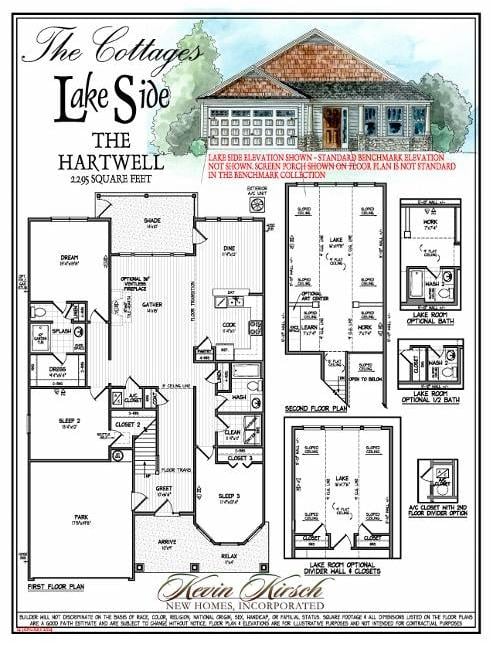
The floor plan I chose when I built my own home for three generations. The four-bedroom, three-bath layout gave my mother, my grown son and me our own areas while still giving us shared spaces where we could be together. My son and I still live in this home today.
Don't Search Only for "Multigenerational Homes"
This is one of the biggest things I want buyers to understand.
A house does not have to be marketed as a "multigenerational home" to work beautifully for several generations.
If all we do is search for phrases like:
"Mother-in-law suite."
"Second primary suite."
"Multigenerational home."
"Guest suite."
...we could miss some really good houses.
Instead, I want to know how your family needs to live.
Who needs to be downstairs?
Who needs their own bathroom?
Does someone work from home?
Does an aging parent need to avoid stairs?
Does an adult child need more independence?
Does someone need a separate entrance?
How many cars do we need to park?
Would another living area make everybody happier?
Those answers tell me much more than an MLS label ever could.
We're not just searching for bedrooms. We're searching for function.
Bathrooms Matter. Trust Me. 😂
Three generations of adults sharing one bathroom?
We're going to need prayer.
And possibly a schedule. 😂
Seriously, though, bathroom placement can make an enormous difference in how comfortably a home functions.
That's one reason having three full bathrooms worked so well in my own home.
When we're looking at houses, don't just count bathrooms.
Look at where they are.
A bathroom on the opposite side of the house may technically make the numbers work, but that doesn't necessarily mean the layout works for your family.
Think About Privacy Before You Need It
Families love each other.
Families also need doors. 😂
Privacy becomes especially important when everyone living in the house is an adult.
Maybe Mom likes to go to bed at 8:30 and you don't.
Maybe your grown child comes home late.
Maybe somebody works from home.
Maybe one person wants to watch television while somebody else wants quiet.
The best multigenerational layouts create natural separation without making anybody feel isolated.
That might mean bedrooms on opposite sides of the house, a bonus room, separate sitting areas, a first-floor suite or even a finished space over a garage.
Togetherness and independence can exist in the same house.
If a Parent Is Moving In, Think Beyond Today
This one is important.
A home that works for a healthy 65-year-old may not work the same way at 75 or 85.
You don't have to turn your house into a medical facility because Mom is moving in. 😂
But we should think ahead.
A first-floor bedroom may become important. A full bathroom nearby matters. Too many steps may eventually become difficult. Doorway widths, shower access and the path from the driveway into the house may matter more later than they do today.
I'm a big believer in asking:
"Will this house still work if our needs change?"
Because they probably will.
And Don't Forget the Grown Kids
Multigenerational living isn't only about aging parents.
Sometimes grown children live at home while saving money.
Sometimes they're starting careers.
Sometimes they're rebuilding after a life change.
Sometimes everybody simply decides that sharing a home makes more financial sense than maintaining several households.
That doesn't mean your 30-year-old necessarily wants to feel like they're 14 again. 😂
A separate bedroom area, bathroom, bonus room, garage apartment or other flexible space can provide some independence while still allowing the family to share one property.
Want Land So Everybody Can Spread Out? Slow Down a Minute.
This is where people can get themselves into trouble.
You might see five beautiful acres and immediately think:
"Perfect! We'll build Mom a little house in the back."
Maybe.
But owning the land doesn't automatically mean you can do whatever you want with it.
Zoning, deed restrictions, septic capacity, setbacks, access, flood considerations and rules regarding additional dwellings can all affect what is possible.
If part of your multigenerational plan involves acreage or eventually adding another dwelling, read my guide to buying a home with land in Southeast Georgia before assuming the property can accommodate your plans.
That's why we investigate those questions before you buy, not after you've already started picking out Mom's porch furniture. 😂
Sometimes the Right House Isn't Where You Originally Planned to Live
Multigenerational buyers may also need to widen their map.
The house that accommodates several adults, gives everyone some privacy and still fits the budget might not be in the exact neighborhood you originally pictured.
That's where we start comparing lifestyle along with the house.
Would Savannah work best?
Would Rincon give you what you need?
Springfield?
Guyton?
Would going a little farther out give you more house or land?
If you're deciding between Savannah or Effingham County, I've put together a guide to help you compare the areas based on how you actually want to live—not simply which house catches your eye first.
And here's something I say often:
The right house in the wrong location is still the wrong house.
Multigenerational Living Can Be Part of a Bigger Financial Picture
There can also be a financial side to this decision.
Multiple generations maintaining separate households means multiple housing payments or housing expenses, utilities, insurance, maintenance and all the other costs that come with having a home.
For some families, sharing one property may allow them to combine resources differently, help care for one another, reduce certain duplicated household expenses or give younger family members time to build savings.
And when a family owns real estate, that property may become part of a longer-term wealth and estate-planning conversation.
But I don't want to oversimplify this.
Buying a multigenerational home doesn't automatically create generational wealth.
How the property is purchased, financed, titled, maintained and eventually transferred can matter.
Those are conversations worth having with the appropriate lender, attorney, tax professional and estate-planning professional when applicable.
My job is to help you make the real-estate decision with your family's bigger picture in mind.
What If One of the Buyers Is Buying Their First Home?
This happens, too.
A parent may be helping an adult child buy.
Adult children may be purchasing a property where a parent will live with them.
Family members may be combining resources.
There are many ways families structure homeownership, and financing can become more complicated when multiple people are involved.
INTERNAL LINK HERE: Link “first-time home buyers in Savannah” to your October 5 FHA/USDA/down-payment article:
If someone involved in the purchase is buying for the first time, my guide for first-time home buyers in Savannah explains some of the basics about FHA, USDA, down payments and getting preapproved.
Then we'll involve a good lender early so everyone understands what is, and isn't, possible before we start shopping.
Don't Just Ask, "Does Everybody Fit?"
Ask:
Does everybody have some privacy?
Does the bathroom situation make sense?
Who has to use the stairs?
Where will everybody park?
Is there enough storage?
What happens when everyone is home at the same time?
Can somebody work from home without sitting at the kitchen table?
Could the home adapt if a parent's mobility changes?
Could part of the house serve a different purpose five or ten years from now?
And here's one of my favorites:
What does an ordinary Tuesday look like in this house?
Because you're not buying a house for Thanksgiving dinner.
You're buying it for Tuesday morning when somebody is making coffee, somebody is trying to get out the door, somebody is on a Zoom call, somebody needs the bathroom and somebody can't find their keys.
That's when a floor plan either works, or it doesn't. 😂
My Own Family Changed. The House Still Works.
This may be the greatest lesson my own house taught me.
I built it for three generations.
Today, my son and I still live there.
Our family circumstances changed, but the house remained useful because the floor plan was flexible enough to change with us.
That's something I'd encourage any multigenerational buyer to consider.
Don't only buy for exactly what your family looks like today.
Think about what happens if circumstances change.
Could Mom's area someday become a guest suite?
Could an adult child's area become an office?
Could a bedroom serve another purpose?
Would the house still make sense if fewer people eventually lived there?
Good multigenerational design isn't only about accommodating more people. It's about creating flexibility.
One Home. Different Generations. A Whole Lot of Life.
I loved having my mother under my roof.
And I'm grateful that when I built my home, I thought about how the three of us would actually live in it, not simply whether there were enough bedrooms.
That experience has stayed with me.
So when a buyer tells me:
"Mom may be moving with us."
"Our grown son is coming too."
"We need somewhere Dad can have his own space."
or
"We're trying to figure out how our family can buy together."
I understand that we're looking for more than square footage.
We're looking for a home that lets a family be together without everybody living on top of each other.
And sometimes that home won't have the words multigenerational anywhere in the listing.
That's okay.
We'll know what we're looking for.
NEED ROOM FOR EVERYBODY? LET'S FIND THE RIGHT FIT.
If you're considering a multigenerational home in Savannah, Effingham County or elsewhere in Southeast Georgia, let's talk about how your family actually needs to live.
We'll look beyond bedroom count and think about privacy, bathrooms, accessibility, location, land, flexibility and what will work for your family long-term.