Trying to choose between a townhome and a single-family home in Pooler? You are not alone. With Pooler’s steady growth near I-95, I-16, and the airport, both options are popular for first-time buyers and downsizers. In this guide, you will learn how HOA rules, maintenance, costs, privacy, and commute patterns differ in Pooler so you can pick what fits your lifestyle and budget. Let’s dive in.
Quick takeaway
- Townhomes in Pooler often trade larger yards for low-maintenance living and closer access to shops and commuting routes.
- Single-family homes offer more private outdoor space and control over upkeep, with responsibility for the entire exterior.
- Your total monthly cost depends on HOA services, insurance needs, property taxes, and any flood insurance.
- Always verify HOA coverage, reserves, flood zone status, and commute times before you decide.
Pooler market context
Pooler’s growth is tied to its access to I-95 and I-16, proximity to Savannah/Hilton Head International Airport, and expanding retail and dining. New construction and master-planned communities are common, with both single-family homes and attached townhome options. Inventory can change quickly, so check current listings and local market reports when you are ready to shop. Many buyers choose Pooler for convenience to regional jobs and amenities while keeping a suburban feel.
HOA rules and maintenance basics
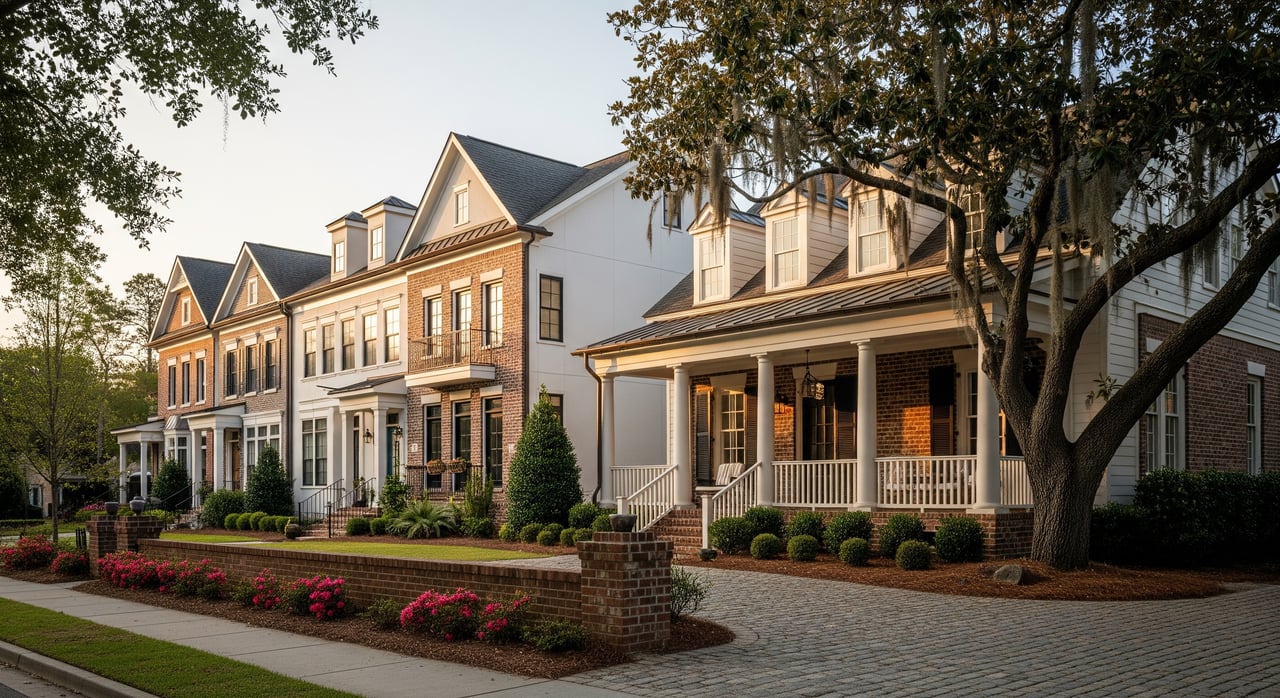
Townhome communities typically have stronger HOA involvement because buildings share walls and exterior systems. Many townhome HOAs cover exterior elements like roofs, siding, gutters, and often front landscaping. Owners usually handle interior systems, HVAC servicing, and utilities, and sometimes a small patio or rear yard.
Single-family neighborhoods vary. Some have no HOA, which gives you full control and full responsibility for exterior and yard maintenance. Others have HOAs that focus on common areas and amenities while leaving exterior maintenance to the owner. Fees for single-family HOAs are often lower than townhome HOAs because they do not fund shared building components.
What to review in HOA documents
Before you write an offer, request and read:
- Covenants, Conditions & Restrictions (CC&Rs), bylaws, and rules
- Current budget, reserve study, and recent board meeting minutes
- Master insurance policy details and what your policy must cover
- Rental restrictions, leasing caps, pet policies, and parking rules
- Management info and contact details
Cost check: fees, taxes, insurance
Your budget should look beyond the purchase price. Compare the mix of HOA services, insurance needs, taxes, and maintenance to get a true monthly cost.
HOA fees and services
Townhome HOA fees are often higher because they can include exterior maintenance, building insurance, and reserves for big items like roof replacement. Single-family HOA fees, when present, usually focus on amenities and common areas. Do not judge by the fee amount alone. Compare line by line what the fee includes and whether reserves are adequate.
Property taxes and flood risk
Pooler properties are subject to Chatham County taxes and any municipal rates. To estimate taxes and confirm millage, review the Chatham County Tax Assessor records. Pooler has parcels in FEMA flood zones, so verify flood status using FEMA Flood Insurance Rate Maps and Chatham County GIS. Flood insurance can change affordability, so check early.
Insurance differences
- Townhomes: Confirm if the HOA master policy is all-in or only covers common elements. You may need an HO-6 policy to insure interior finishes, personal property, liability, and loss assessment.
- Single-family: A standard HO-3 policy typically covers the dwelling and property. Premiums depend on value, age, wind coverage needs, and flood risk.
Maintenance and repair
Townhome owners often avoid major exterior projects, though special assessments can occur if reserves are low. Single-family owners should plan for full exterior upkeep, including roof, siding, lawn, irrigation, trees, and driveways. A general rule is to budget 1 to 3 percent of the home’s value annually for long-term repairs, adjusted for the home’s age and systems.
Lifestyle and location trade-offs
Lot size and privacy
Townhomes offer compact outdoor areas or patios with less yard work. Single-family homes provide more space for gardening, pets, or future additions. If you want privacy and room to spread out, a detached home may suit you better.
Noise and parking
Attached walls can mean more noise transfer with townhomes, and parking may be assigned or limited. Single-family homes usually offer a driveway, garage, and more flexible guest parking. Always review guest parking and on-street rules in HOA documents.
Access, amenities, and commute
Townhome communities often sit closer to retail and major roads, which helps daily errands and commute times. Single-family neighborhoods farther from commercial corridors may feel quieter and offer community amenities in master-planned settings. Pooler’s location works well for commuters to downtown Savannah, the airport, and regional logistics employers. Homes near Pooler Parkway or interchanges may trade a bit of traffic for faster highway access.
Mobility and stairs
Many townhomes are two or three stories, which can be a factor if you prefer fewer stairs. If you want low maintenance without stairs, look for one-level townhome layouts or smaller single-family ranch plans.
Who each option fits
First-time buyers
You may like townhomes for lower maintenance and proximity to shopping and commuting routes. Confirm HOA fees and services, and make sure the HOA’s financials are healthy. Ask your lender about any requirements for attached homes.
Downsizers
You might choose a townhome to simplify exterior upkeep and stay close to medical services, shopping, and dining. If you still want yard space, a small single-family home in a quiet enclave can work well. Consider guest parking, noise transfer, and stair-free options as you compare.
A step-by-step comparison checklist
Use this to compare two properties side by side.
- Property basics
- Property type and legal form: fee-simple townhome, condo, or single-family
- Lot size and usable outdoor area
- Year built, roof age, HVAC age, window updates
- HOA essentials
- Monthly fee and exact services covered
- CC&Rs, bylaws, and rule summaries
- Budget, reserve study, and any pending special assessments
- Master insurance coverage, owner policy type required
- Rental caps, pet policies, and parking rules
- Protection and risk
- Flood zone status and elevation
- Insurance quotes for homeowners and flood
- Easements or drainage features on the lot
- Practical living
- Parking spaces and garage size
- Guest parking availability
- Stairs, accessibility, and storage
- Location and daily life
- Drive times to downtown Savannah, the airport, major employers, and your daily errands
- Proximity to grocery, medical services, and major retail
- Neighborhood amenities like pools, trails, or parks
- Total monthly cost estimate
- Principal, interest, taxes, insurance
- HOA fee and what it replaces, such as exterior maintenance or lawn care
- Estimated owner maintenance if single-family
- Resale context
- Recent comparable sales for both townhomes and single-family homes nearby
- Local projects or road changes that could affect traffic or character
How Lisa can help you decide
Choosing between a townhome and a single-family home is easier when you see the full picture. With 25 plus years in the Savannah and Pooler area, Lisa brings local insight on HOA structures, flood considerations, commute patterns, and neighborhood amenities. She can help you gather HOA documents, coordinate insurance and lender input, and compare true monthly costs so you can move forward with confidence.
Ready to talk through your options in Pooler? Connect with Lisa Ortiz, The Rockin' Realtor for a friendly, no-pressure consultation.
FAQs
What does a Pooler townhome HOA usually cover?
- Many townhome HOAs handle exterior items like the roof, siding, gutters, and some landscaping, while owners cover interiors, utilities, and sometimes small rear yards.
How do I compare monthly costs for Pooler homes?
- Add mortgage, taxes, and insurance to HOA fees, then factor in owner maintenance for single-family homes or potential assessments for townhomes.
Are Pooler townhomes harder to finance than single-family homes?
- Townhomes often finance like fee-simple homes, but some attached communities have specific lender requirements, so check with a local lender early.
How do I verify flood risk for a Pooler property?
- Review FEMA Flood Insurance Rate Maps and Chatham County GIS to confirm flood zones, then get quotes for flood insurance if required.
What should downsizers weigh when choosing in Pooler?
- Look for low maintenance, minimal stairs, convenient parking, and proximity to shopping and medical services, then confirm HOA rules and reserves.